
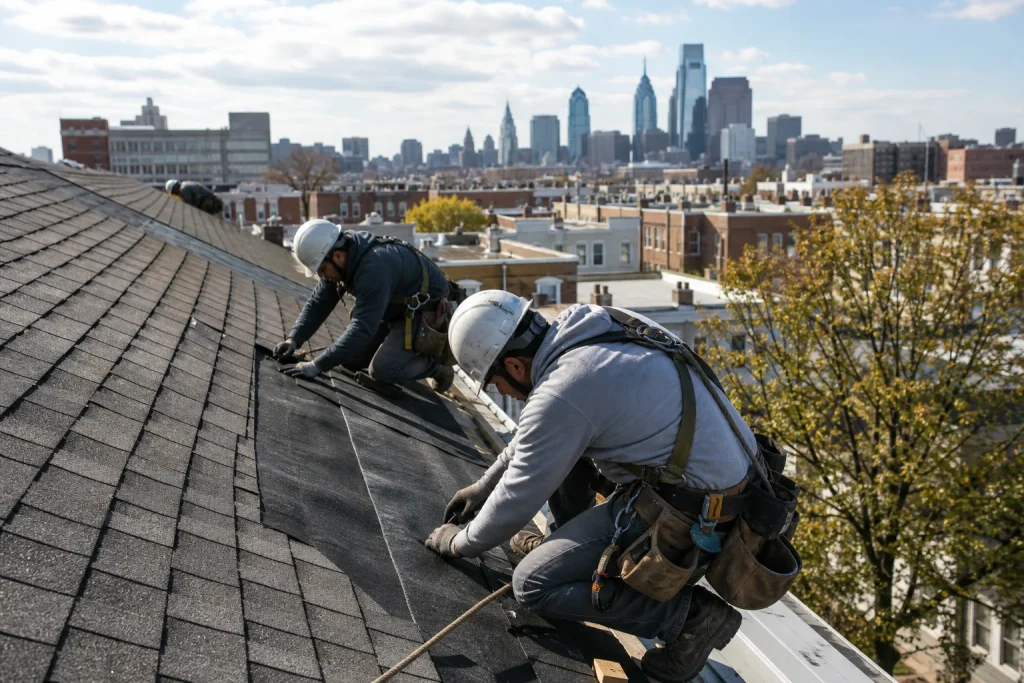
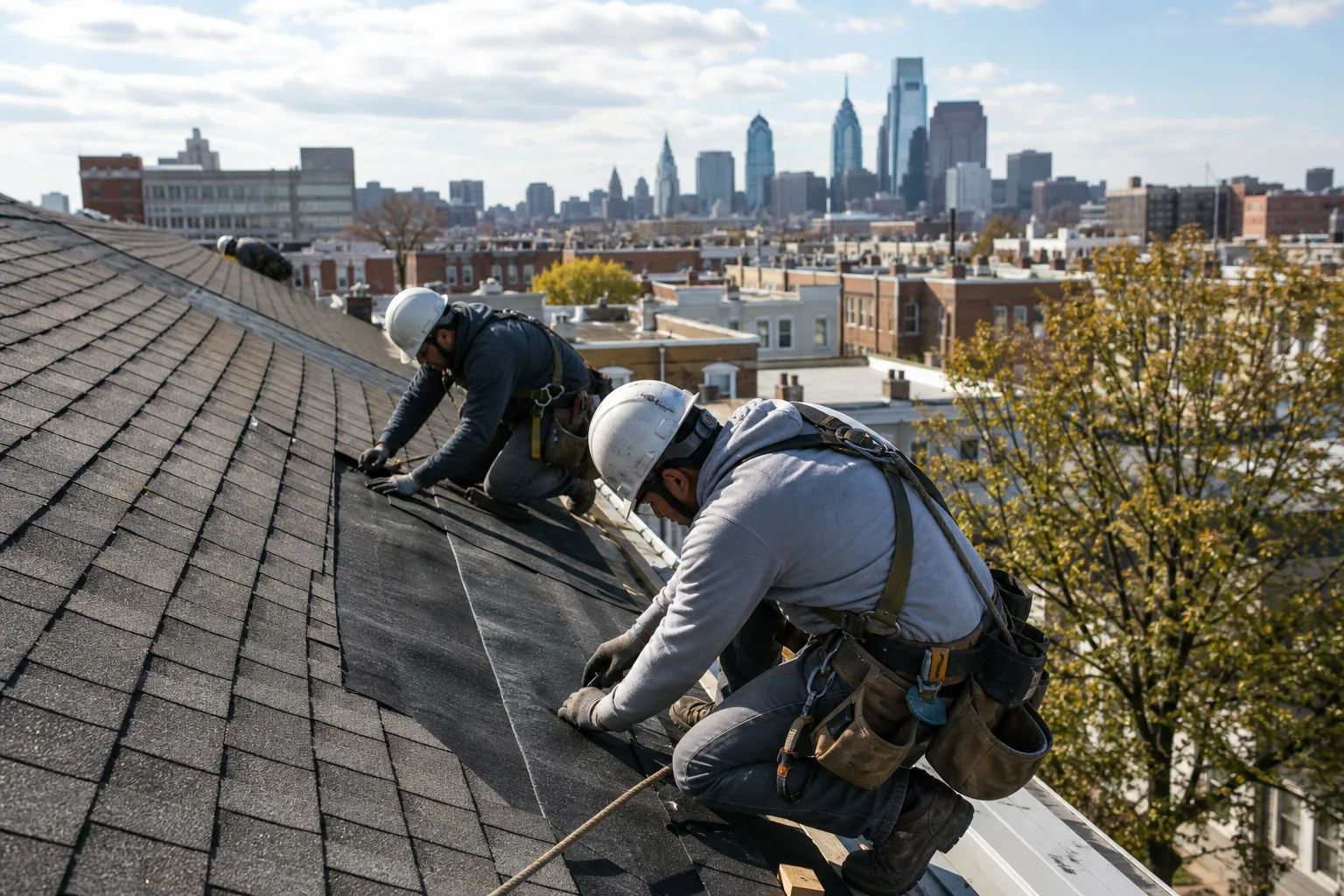
How to Choose the Right Roofing Company in Philadelphia
Choosing the right roofing company in Philadelphia means looking past star ratings and finding a contractor who will still be around to honor their work when problems surface. A well-installed roof in Philadelphia’s climate, with its freeze-thaw cycles and summer humidity, should last 20 to 30 years, but workmanship flaws often take three to five years to reveal themselves. The contractors who do the best work are usually not the ones with the flashiest trucks or the lowest bids, but the ones who can show you decades of local addresses, written warranties with real backing, and inspection reports that document what they actually found on your roof.
If you’d rather skip the vetting homework and talk with a crew that’s been on Philadelphia roofs since 1984, call us at (855) 554-5116. We answer live, 24/7.
Why Review Counts and Low Bids Can Mislead You
Storm-chaser operations and community roofers can have identical Google ratings for years, because a roof installed wrong in 2023 won’t tell on itself until 2026. By then, the out-of-town crew has changed its name, its number, or its state of incorporation. We’ve seen this pattern repeat after every major Philadelphia storm season.
The problem with relying on reviews alone is timing. Most homeowners post reviews within days of completion, when the shingles still look pristine and the crew was polite. They don’t post updates at year four when the improperly flashed valley starts leaking, or at year seven when the voided manufacturer warranty leaves them paying for a full replacement.
Low bids work the same way. A price that seems too good usually omits something: proper underlayment, ice-and-water shield at the eaves, or the cost of hauling away old material. We’ve repaired roofs in Echelon and across Philadelphia where the previous contractor’s “savings” left the homeowner with $8,000 in water damage six months later.
Here’s what to check before you even request a quote:
- How long has the business operated at its current Philadelphia address? (Not how long they’ve “served the area” - where is their actual office?)
- Can they show you a completed job from five or more years ago, with the homeowner’s permission to contact them?
- Do they carry general liability and workers’ compensation, or only one?
- Will they put their inspection findings and scope of work in writing before asking for a deposit?
How to Verify a Contractor’s Real Operating History
A local business address, verifiable since before the last major storm season, is a more reliable qualifier than review count. Philadelphia-area homeowners can cross-check a contractor’s actual history through Pennsylvania’s business registration records at the Department of State website. Look for the date of incorporation, any name changes, and whether the entity was dissolved and reformed, a common storm-chaser tactic to shed warranty obligations.
Ask directly: “What was your company’s name before 2020?” If they hesitate or claim they’ve always operated under the current name, that’s worth investigating. We’ve operated as Ridgeline Roofing Co. since 1984. Our office location, our phone number, and our crew leadership have remained continuous through multiple Philadelphia mayors and more storm seasons than we care to count.
Physical presence matters in a city like Philadelphia, where building codes vary by municipality and permit requirements differ between Center City rowhouses and suburban-style homes in the Northeast. A contractor who knows which inspector covers which district saves you weeks of delay. One who has to Google “Philadelphia roofing permit” while standing on your porch does not.
The Insurance Documents You Should Actually Request
Every guide says “ask for proof of insurance.” Almost none tell you what to look for once you have it. Request a certificate of insurance directly from the contractor’s agent, not a PDF they email you. Here’s what to verify:
- Certificate holder: Your name and address should be listed, not just “available upon request.”
- Policy expiration dates: Confirm coverage extends through your project’s completion date plus 30 days.
- General liability limits: Minimum $1 million per occurrence is standard for residential roofing in Philadelphia.
- Workers’ compensation: This is the one homeowners routinely skip, and it’s the one that protects you if a worker is injured on your property. If the contractor uses subcontractors, request certificates for them too.
We’ve carried both coverages without interruption since 1984. When we arrive for an estimate, we bring current documentation. Any contractor who bristles at this request is telling you something about how they handle accountability.
What a Pre-Job Roof Inspection Report Should Contain
A contractor who won’t provide a written inspection report before work begins is telling you something important about how they handle warranty claims. The report should document:
- Photographs from your actual roof, not stock images, showing each area of concern
- Specific measurements of damaged or worn sections
- Deck condition assessment, including soft spots or prior water intrusion
- Existing ventilation configuration and any deficiencies
- Flashings, penetrations, and valley conditions with individual notes
- Recommended scope of work with line-item breakdown
Our technicians, background-checked and uniformed, document every roof replacement and installation inspection this way. The photos go to you, not just to our files. When a Philadelphia homeowner calls us two years later with a concern, we pull the original images and compare. No arguing, no paperwork runaround. If it’s not right, we make it right. That’s our 90-Day Done Right Promise, and it’s written, not implied.
A verbal estimate in the driveway, however friendly, leaves you with no baseline if disputes arise. Demand the paper.
How to Evaluate a Workmanship Warranty
Not all warranties are equal. Most residential roofing warranties contain carve-outs that make them functionally unenforceable. Here’s how to tell the difference.
Three clauses that make a warranty meaningful:
- Transferability to subsequent owners - increases your home’s resale value and shows the company expects to remain in business
- No maintenance requirements that void coverage - some warranties require annual “certified” inspections by the original installer, an easy way to deny claims
- Explicit workmanship coverage separate from manufacturer material coverage - material defects are rare; installation errors cause most premature failures
Two common carve-outs to watch for:
- “Prorated” labor after year one - meaning you pay increasing portions of repair costs over time
- Exclusions for “acts of God” so broadly defined that normal Philadelphia weather events qualify
Our 90-Day Done Right Promise covers workmanship with no proration, no maintenance mandate, and no weather exclusions for standard Philadelphia conditions. Named for the ridge - the line where a roof proves itself - we stand behind it with no paperwork, no arguing.
When to Call a Pro
If you’re uncomfortable climbing a ladder, if your roof is more than fifteen years old and you’ve never had a documented professional inspection, or if you’re comparing estimates that vary by more than 30 percent, it’s time to call someone who can give you straight answers. Specialty roofing in Echelon and throughout Philadelphia requires specific expertise with slate, tile, or metal systems that generalist crews often mishandle.
Related Services in Philadelphia
Ridgeline Roofing Co. provides roof repair, replacement, and installation across Philadelphia, with roof repair in Echelon, roof replacement and installation in Echelon, and specialty roofing in Echelon among our service areas.
What happens when you call
- 1
A real person answersNo phone trees - you reach a local pro.
- 2
You get an upfront price rangeHonest numbers before anyone is dispatched.
- 3
A background-checked tech heads outLicensed & insured, dispatched right away.
- 4
You approve before work beginsNothing starts until you say go.
The Post-Job Questions That Reveal Long-Term Accountability
The vetting doesn’t end when the crew leaves. Ask these questions before you sign, because they predict how you’ll be treated when you need help:
Does the same company answer the phone two years from now? We do. Live person, 24/7, including nights, weekends, and the middle of a storm. No voicemail trees, no callback windows.
Is the warranty tied to a named person or a business entity that could dissolve? Ours is backed by Ridgeline Roofing Co., incorporated continuously since 1984. We’ve outlasted three recessions and dozens of competitor names.
Who do you call at 11 p.m. when the repair is leaking again? We pulled one out of a garage over in East Falls last month where the previous contractor’s “emergency line” went to a full mailbox. Our phones are staffed around the clock because we’ve been the ones standing in a living room with buckets on the floor.
A square deal means the price we quote is the price you pay. It also means we’re there when we say, and we answer when you call. That’s not a slogan. It’s how we’ve operated for over 42 years.
The Bottom Line
The right roofing company in Philadelphia is the one you can find, verify, and reach when something goes wrong. Check their business registration history, request real insurance certificates, demand written inspection reports with photos, read the warranty fine print, and confirm they’ll answer the phone at midnight. These five conversations separate contractors who install roofs from contractors who stand behind them.
If you’re in Philadelphia and want a crew that’s been here since 1984, call (855) 554-5116 for a free estimate. We answer live, day or night. A square deal: the price we quote is the price you pay. Done right - and if it’s not, we make it right.
Frequently Asked Questions
Three quotes is standard advice, but quality of information matters more than quantity. Two detailed, written estimates from established Philadelphia contractors with verifiable local histories will serve you better than four verbal ballpark figures from crews you can’t locate next year. Ask each for their inspection report, insurance certificates, and warranty terms before comparing numbers. Call (855) 554-5116 if you’d like our documentation - estimates are free.
Repair is cheaper in the short term when damage is isolated to one or two areas and the roof is under twelve years old. Replacement becomes the better investment when repairs exceed 30 percent of replacement cost, when the roof is past two-thirds of its expected lifespan, or when multiple layers of old shingles are present, a common issue in Philadelphia’s older rowhouse stock. We evaluate each roof individually and tell you honestly when repair is throwing good money after bad. Call (855) 554-5116 for an assessment - estimates are free.
Verify their business address through Pennsylvania’s Department of State corporation records, not just their website. Check if the address matches a physical office or only a mailbox. Ask for local references from jobs completed five or more years ago. A genuinely local Philadelphia contractor will know specific permit requirements for your neighborhood and can name local suppliers they work with regularly. Storm chasers often use generic area codes and vague “serving the greater Philadelphia area” language without a fixed address.
A proper estimate specifies shingle type and manufacturer (we’re authorized for GAF, CertainTeed, Owens Corning, and others), underlayment grade, ice-and-water shield placement, ventilation components, flashing details, debris removal, permit costs, and exact start and completion dates. It should also state the total price with no “subject to change” clauses for standard conditions. Our estimates are fixed: the number we quote is the number on the invoice, no surprises. Call (855) 554-5116 to request yours.
Written by the team at Ridgeline Roofing Co. of Philadelphia, serving Philadelphia since 2014.
Need Roofing Help?
Call Ridgeline Roofing Co. of Philadelphia - licensed & insured, here with fast after-hours help in Philadelphia.
(855) 554-5116