
Emergency Specialty Roofing When Philadelphia Homeowners Need It Most
We answer 24/7. Call (855) 554-5116 now. If water is coming through your ceiling, your parapet wall is spilling into the neighbor’s bedroom, or a summer storm just peeled back your modified bitumen membrane, we’re already dispatching. Philadelphia’s flat-roof rowhouses don’t give you the luxury of waiting until Monday morning. We’re licensed, insured, and we know these roofs.
Available 24/7 for Specialty Roofing Emergencies in Philadelphia
Call (855) 554-5116 any hour. We don’t send you to voicemail.
A roofing emergency in Philadelphia isn’t the same as a roofing emergency anywhere else. When your rowhouse roof fails, the shared party wall means water doesn’t respect property lines. We’ve taken calls at 2 a.m. from homeowners in Fishtown whose leak started three doors down. We’ve tarped roofs in South Philly during January freeze-thaw cycles when membrane seams were splitting audibly. Summer storms in Philadelphia can push 90°F temperatures straight into pounding rain, thermal-shocking EPDM seams that were already UV-fatigued.
Here’s what counts as an emergency: active interior leaking, visible membrane separation or bubbling, parapet wall cap flashing that’s detached or missing, HVAC pitch pocket failure with water entry, and any post-storm damage where the roof’s protective layer is compromised. If you’re unsure, call anyway. We’ll talk it through.
While you’re waiting for our crew, move valuables away from the leak path, place a bucket, and if safe, take photos from the interior for insurance. Don’t climb onto a wet flat roof yourself. The parapet walls on Philadelphia rowhouses are often only 8-12 inches high and offer no fall protection.
Emergency Specialty Roofing We Handle in Philadelphia
- Parapet wall cap flashing failure at party-wall junctions. This is the signature Philadelphia emergency. The cap flashing straddling your shared masonry wall expands and contracts through 20-30 freeze-thaw cycles each winter. When it separates, water tracks down the interior wythe and surfaces inside your neighbor’s house, not yours. We inspect and re-flash this junction on every emergency call, even when the homeowner points to a different suspected source. We use modified bitumen membrane strips and new metal counterflashing, not temporary caulk.
- Modified bitumen membrane blow-offs and seam splits. Philadelphia’s combination of 90°F summer surface temperatures and sudden cold fronts creates thermal cycling that attacks APP and SBS seams. When a section peels back, the substrate beneath saturates within hours during rain. We carry torch-grade and self-adhering modified bitumen in our emergency vehicles, sized for rowhouse roof areas, and we can heat-weld or cold-apply depending on conditions.
- EPDM rubber membrane punctures and seam failures. Common on rear shed extensions and newer flat-roof additions, especially in Northeast Philadelphia where post-WWII homes got flat-roof rear expansions. HVAC service traffic, falling branches, and UV degradation at seam edges create entry points. We patch with cured EPDM cover tape or liquid-applied seam primer, and we inspect the surrounding 10 feet because EPDM stress cracks travel.
- Built-up roofing (BUR) gravel wash-off and exposed felts. Older Philadelphia rowhouses still carry 3- or 4-ply BUR systems. When summer storms wash away the protective surfacing, the underlying felts UV-degrade and blister within days. We apply flood coats of asphalt and new gravel, or install a modified bitumen cap sheet if the BUR substrate is sound enough. On Kensington and West Philadelphia jobs, we’ve found BUR systems dating to the 1970s that still had salvageable plies beneath the damage.
Our Emergency Response Process
Call (855) 554-5116. You’ll speak to a person who understands roofing, not a call center reading a script.
We ask three things: your neighborhood, what you’re seeing inside the house, and whether the leak is active right now. That tells us what to load. For a Kensington rowhouse with parapet flashing failure, we’re bringing masonry-cap metal, modified bitumen, and mortar. For a Northeast Philadelphia EPDM puncture, we’re bringing patch kits and seam primer.
Our crew arrives, identifies the true source (not just where water is appearing inside), and performs temporary or permanent stabilization depending on conditions. Night work in Philadelphia gets full safety lighting and traffic control where needed. We photograph everything for your records.
Before we leave, you’ll know what we did, what permanent repair is needed if we performed a temporary fix, and what it costs. No hidden emergency fees. No surprise line items.
Emergency Specialty Roofing Cost in Philadelphia
Emergency calls carry a standard service fee that covers after-hours dispatch and the initial assessment. The repair itself is priced by scope, not by the clock.
| Service | Typical Range |
|---|---|
| Emergency service call & assessment | $150 - $250 |
| Parapet cap flashing repair (party-wall junction) | $400 - $850 |
| Modified bitumen patch / seam repair | $350 - $700 |
| EPDM patch or seam restoration | $300 - $600 |
| BUR flood coat & re-surfacing | $500 - $1,200 |
| Emergency tarping (temporary) | $200 - $400 |
We don’t charge extra for nights, weekends, or holidays. The price is the price. Call (855) 554-5116 for an exact quote - estimates are free.
Frequently Asked Questions - Emergency Specialty Roofing in Philadelphia
We typically arrive within 2-4 hours for active leaks in Philadelphia proper, depending on traffic and weather conditions. During major storm events, we prioritize active interior flooding and safety hazards. Call (855) 554-5116 to check current response times - we’ll give you a straight answer.
For Philadelphia rowhouses with localized parapet flashing failure or isolated membrane damage, repair is almost always more cost-effective. Full replacement becomes the better option when you’re seeing multiple failure points, substrate saturation, or the system is past its rated lifespan. We’ll tell you honestly which path saves money over a 10-year horizon. Call (855) 554-5116 for a free assessment.
Philadelphia’s attached rowhouses share masonry party walls that extend above the roofline as parapets. When cap flashing fails at that shared junction, water runs down the interior of the wall cavity. Gravity and the slope of interior framing determine where it exits - often one or two houses away from the actual roof defect. An experienced Philadelphia roofer always traces the true source before repairing. Call (855) 554-5116 and we’ll find it.
Yes, though Philadelphia’s emergency roofing calls overwhelmingly involve flat and low-slope systems. Northeast Philadelphia’s semi-detached homes and some West Philadelphia properties have pitched roofs where we handle asphalt shingle blow-offs, damaged ridge vents, and slate tile repairs using GAF and CertainTeed materials. We carry the right products for whatever roof type you have.
Most homeowner policies cover sudden, accidental damage from storms or falling objects, but not gradual wear or maintenance issues. We document everything with photos and detailed descriptions to support your claim. We don’t work for insurance companies - we work for you - but we’ll provide what your adjuster needs. Call (855) 554-5116 and we’ll start that documentation on arrival.
Call for Emergency Specialty Roofing in Philadelphia - We Answer 24/7
Water doesn’t wait. Neither do we. Call (855) 554-5116 now for our Specialty Roofing services in Philadelphia. Licensed, insured, and fluent in the flat-roof rowhouse systems that define this city. We’re already loading the truck.
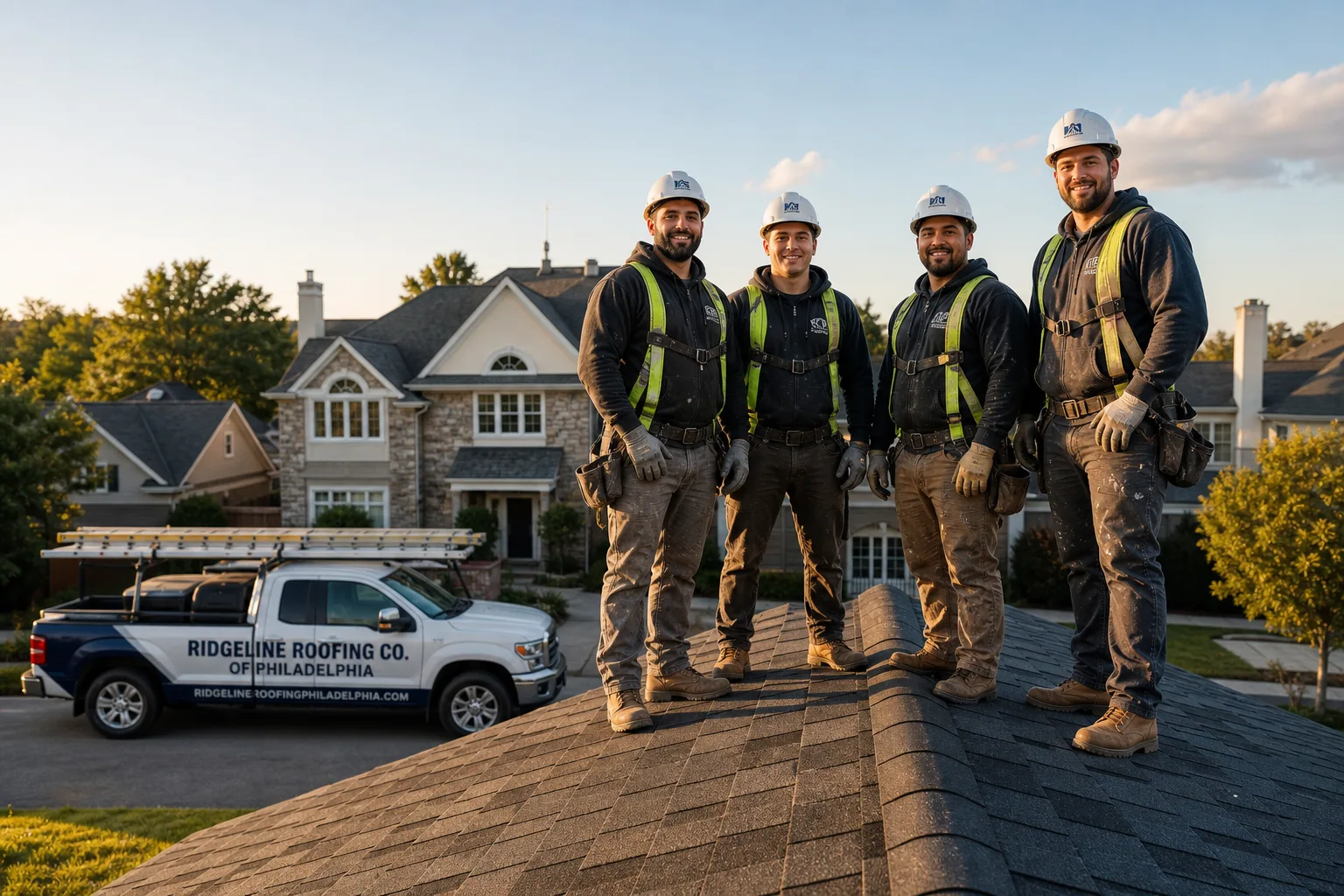
Written by the team at Ridgeline Roofing Co. of Philadelphia, serving Philadelphia homeowners with the Best Specialty Roofing in Philadelphia, PA since 2016.
What Our Customers Say
"The leak over the kitchen turned out to be a cracked boot around a vent pipe, not the roof. He showed me the photo from up there and replaced the boot for a couple hundred dollars. The company before him had quoted a full tear off."
- Wade Thompson"Added a ridge vent and cleared the blocked soffit vents. The attic temperature dropped noticeably and the upstairs is livable in summer now."
- Simone Grant"The valley had been done without proper underlayment and was leaking. Redone correctly, and he explained exactly what had been wrong so I could actually follow it."
- Michelle Yang