
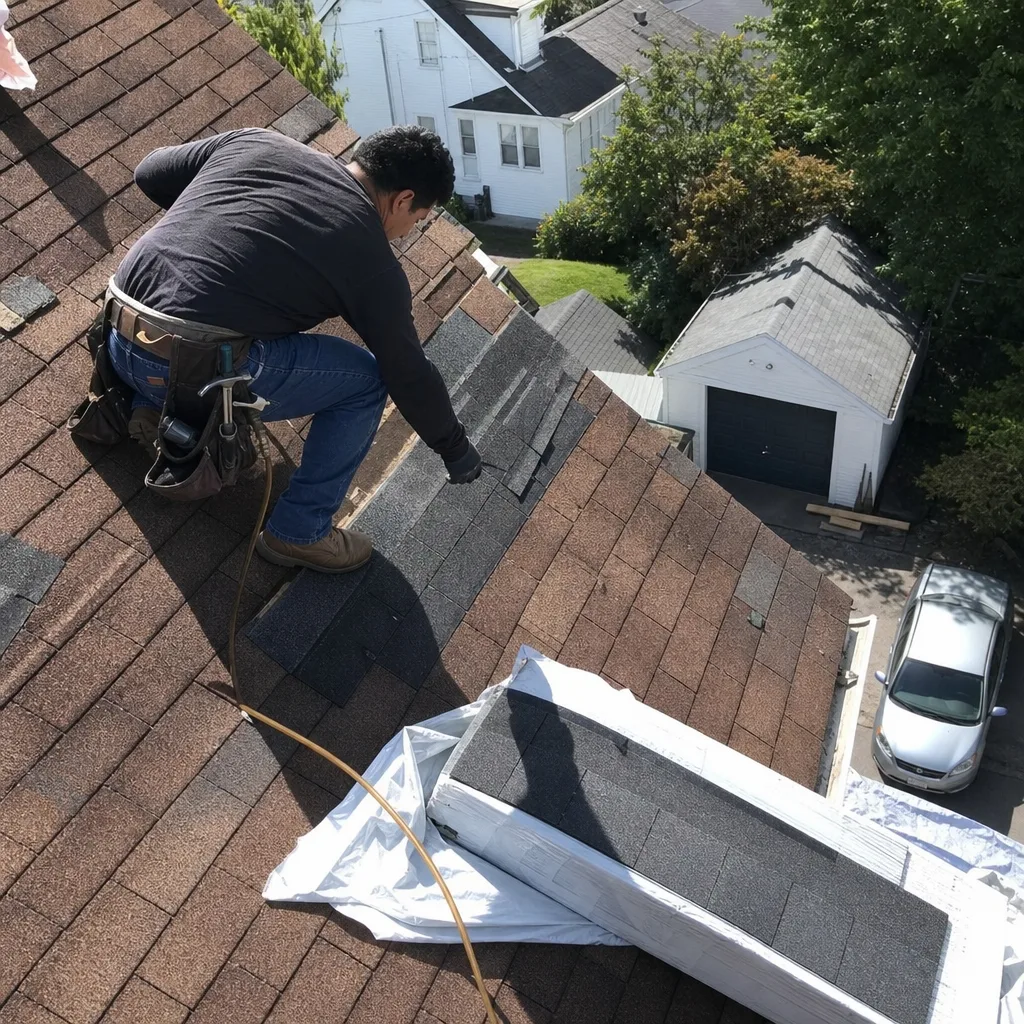
Boral Underlayment & Deck Repair: The Philadelphia Owner’s Guide
Boral underlayment and deck repair in Philadelphia typically runs $380-$720 for a standard repair section, with full deck replacement on larger Boral tile or slate systems ranging $1,200-$2,800. We stock Boral-compatible underlayment rolls, high-temp ice-and-water shield, and CDX plywood decking on every Ridgeline truck, and most Philadelphia repairs are completed same day. Most homeowners first notice the problem during a hard rain, when water starts finding its way past the tile or shingle into the attic - or when a section of roof feels spongy underfoot during gutter cleaning.
Which Boral Models This Applies To
Boral’s roofing systems break into three main lines you’ll see across Philadelphia: the Smog-Eating Tile (concrete flat and low-profile tiles common in Center City and South Philly renovations), Slate Sim (synthetic slate popular in Chestnut Hill and Mount Airy for weight savings on older homes), and the legacy MonierLifetile products still covering plenty of roofs from the 1990s and 2000s. Each uses a specific underlayment specification - Boral’s systems require ASTM D226 Type II or ASTM D4869 underlayment minimum, with most tile installations calling for a double-layer system: a base felt and a self-adhering high-temp membrane at valleys, ridges, and penetrations.
Here’s how to identify what you’ve got. Check the tile butt edge for a stamped “Boral” or “Monier” mark, or look for a specification label left by the original installer, usually in the attic near the ridge. The deck beneath Boral tile is typically 5/8″ CDX plywood minimum - never OSB on the tile systems, as the fastener pull-through resistance matters. For Slate Sim, the nailing pattern is different (wider exposure, hidden fastener clips in some series), so the deck repair must account for the original fastening schedule. We carry both the OEM Boral-spec underlayment and a commercial-grade equivalent that meets the same ASTM ratings at a lower per-roll cost. The OEM carries Boral’s material warranty; the equivalent carries our 90-Day Done Right Promise. Either way, we document what goes on your roof with photos, and you see every layer before we button it up.
One compatibility gotcha we see regularly in Philadelphia row homes: Boral’s high-profile Spanish-style tiles need a heavier #30 base felt and a more robust batten system. If your original installer cheaped out with #15 felt, the underlayment degrades faster, especially where summer attic temperatures in unventilated Philly attics push 140°F.
Signs Your Boral Underlayment & Deck Repair Is Failing
- Water stains on the ceiling that track to a ridgeline or valley. Boral tile and slate systems rely on the underlayment as the primary water barrier - the tile itself sheds most rain, but wind-driven water gets underneath. When the underlayment cracks or the laps separate, the leak follows the deck slope and shows up inside at the low point, often feet away from the actual breach.
- Soft or bouncy spots when you walk the roof. This is deck rot, plain and simple. Philadelphia’s freeze-thaw cycles let moisture that slipped past failing underlayment saturate the plywood. Once the glue delaminates, the deck loses structural integrity. We won’t install new underlayment over compromised decking - it’s throwing good material on bad structure.
- Tile or slate pieces sliding out of position. Boral tiles are heavy - concrete tile runs 900-1,200 pounds per square. If the deck has sagged or the battens have pulled, the tiles lose their seat. The root cause is usually deck deflection from water damage or underlayment breakdown letting moisture attack the nail base.
- Granule or tile debris collecting in gutters with no obvious storm damage. This signals the underlayment is breaking down underneath, letting the tiles rock against uneven deck surfaces. The abrasion grinds the tile underside or the slate edges, and the debris washes down.
- Musty attic smell that worsens after rain. Even before you see a stain, saturated underlayment holds moisture against the deck. In Philadelphia’s humid summers, that trapped moisture breeds mold on the attic side of the plywood. If your attic smells like a basement in July, the underlayment is likely breathing moisture instead of shedding it.
Replacement Cost & What’s Included
Our pricing is straightforward. For a typical Philadelphia repair - say, a 10×10 foot section of failed underlayment and deck beneath Boral tile on a medium-pitch roof - you’re looking at $380-$720 installed. That includes removal of the tile in the affected area (we number and stack every piece for reinstallation), tear-out of saturated decking, installation of new 5/8″ CDX plywood, application of Boral-spec underlayment (double-layer where required), and reinstallation of your original tile with any broken pieces replaced from our stock.
Full deck replacement on a larger Boral system runs $1,200-$2,800, depending on square footage, pitch, and how many layers of old material we encounter. Philadelphia’s older homes - especially the pre-war stock in Germantown and West Philly - sometimes hide two or three previous roof systems, and that tear-off labor adds time.
What drives the range: accessibility (steep pitches, tight row-home alley access), the extent of hidden rot we find after opening the roof, and whether your Boral system uses the standard nail-on batten or the newer clip-fastened Slate Sim system. We price this upfront, before we start. The number on the estimate is the number on the invoice. No surprises. Every repair is backed by our 90-Day Done Right Promise - if it is not right, we come back and make it right, no paperwork, no arguing.
DIY or Call Us?
Here’s where we’re honest with you. A homeowner can safely check the attic after rain for fresh stains, look at the roof from the ground with binoculars for slipped tile, and verify gutter debris. That’s useful information, and it helps us when you call.
But once you’re talking about removing heavy Boral concrete tile, working on a pitched surface, and cutting deck sheathing - that’s where DIY goes wrong fast. Boral tile weighs roughly 10 pounds per piece. A single square (100 square feet) is 800-1,000 pounds of material to lift, stage, and replace without breakage. The deck work involves circular saws on a slope, often near the edge, with the risk of cutting into rafters or electrical runs. And here’s the safety point: Philadelphia’s older row homes have minimal or no fall protection anchors installed. A roof doesn’t lie - and neither do I. We’ve seen too many homeowners take a bad step where the deck was softer than it looked.
Our crew brings scaffolding, toe boards, and harness systems. We’re insured for this work specifically. Most Boral underlayment and deck repairs take four to six hours, and you’re not lifting a finger except to approve the photo documentation we send you from the roof. Call (855) 554-5116 and a live person will answer, 24/7. We’ll get a technician out, usually same day in Philadelphia proper.
FAQs
In Philadelphia’s climate, quality Boral-spec underlayment lasts 20-30 years when properly installed, but we’ve seen premature failure at 12-15 years when the original installer used #15 felt instead of the required #30, or when attic ventilation is inadequate and summer heat cooks the material from below. The freeze-thaw cycling and wind-driven rain off the Delaware and Schuylkill accelerate wear at laps and penetrations. Call (855) 554-5116 for a free inspection if your Boral roof is past fifteen years - estimates are free, and we’ll show you photos of what we’re seeing.
Small, isolated failures at a pipe boot or valley can be spot-repaired with compatible peel-and-stick membrane, but widespread cracking, delamination, or deck rot beneath requires section replacement at minimum. We don’t patch over saturated decking - the rot continues, and you’ll be calling us back in two years. Our 90-Day Done Right Promise means we fix it once. Call (855) 554-5116 and we’ll give you a straight answer on whether a repair or replacement makes sense for your specific situation.
Most standard repairs are completed in a single day, typically four to six hours for a section up to 200 square feet. Full deck replacement on a larger Boral tile roof may run two days, depending on weather and the extent of hidden rot. We don’t rush the drying time - if we open your roof and find wet rafters, we let them dry before we close it up. Call (855) 554-5116 to schedule - we stock Boral-compatible materials on every truck, so we’re not waiting on deliveries.
We stock Boral-compatible underlayment, high-temp ice-and-water shield, 5/8″ CDX plywood decking, and replacement tile on every Ridgeline truck serving Philadelphia. We’re an independent service provider, not affiliated with Boral, but we source materials that meet or exceed Boral’s published specifications. For discontinued MonierLifetile colors, we maintain a salvage network and can often match from existing stock. Call (855) 554-5116 - if we don’t have it on the truck, we’ll tell you exactly when we will.
Written by Ned Calloway, Owner, Ridgeline Roofing Co. of Philadelphia at Ridgeline Roofing Co. of Philadelphia, serving Philadelphia and nearby areas.